
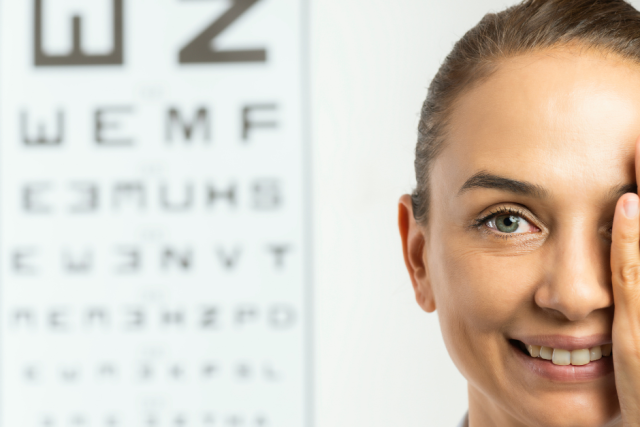
The measurement of vision in clinics uses basic eye charts which require patients to read letter rows from a specific distance. The Snellen chart test provides a fast visual acuity test but fails to measure actual sight abilities which people show when they function in everyday situations. The requirement is essential for various professions and licensing systems which need workers to maintain precise visual performance while monitoring their surroundings for situations that require their attention.
The Ontario Ministry of Transportation MTO and police exam boards use advanced eye examination methods which enable them to assess candidates for their ability to handle real life testing situations. The visual assessments evaluate more than just basic visual clarity because they measure how well someone can see and function in various visual situations.
Limitations of Standard Eye Chart Testing
The measurement of vision in clinics uses basic eye charts which require patients to read letter rows from a specific distance. The Snellen chart test provides a fast visual acuity test but fails to measure actual sight abilities which people show when they function in everyday situations. The requirement is essential for various professions and licensing systems which need workers to maintain precise visual performance while monitoring their surroundings for situations that require their attention.
The Ontario Ministry of Transportation MTO and police recruitment boards use advanced eye examination methods which enable them to assess candidates for their ability to handle real life testing situations. The visual assessments evaluate more than just basic visual clarity because they measure how well someone can see and function in various visual situations.
MTO Vision Standards: Functional Requirements for Driving Safety
The Ontario Ministry of Transportation (MTO) establishes exact vision requirements which drivers must satisfy to obtain their licenses for the purpose of maintaining safe roads. The standards demand more than the ability to read an eye chart.
1. Visual Acuity and Correction
Drivers need to achieve minimum visual acuity standards which typically require 20/50 vision or higher with the use of corrective lenses. The threshold requires more than the existing requirement to be considered sufficient.
2. Peripheral Vision Testing
Drivers need to maintain complete knowledge about their environment at all times. MTO tests use peripheral vision assessments to verify that drivers can see moving objects which exist outside their direct line of sight.
3. Field of Vision Assessment
Drivers need a complete horizontal field of vision to identify pedestrians and cyclists and vehicles. Strong central vision exists with restricted fields which present risks to driving safety.
4. Functional Road Safety Evaluation
Driving tests which replicate real driving situations are used to assess individuals who require medical assessments or commercial driver evaluations. The tests include:
- Tracking moving objects
- Responding to sudden visual changes
- Assessing glare sensitivity (e.g., night driving conditions)
The tests establish whether drivers possess the ability to drive safely through actual traffic situations which require them to identify both traffic signs and letters.
Police Eye Exams: Vision for High-Stakes Situational Awareness
Police officers perform their duties in environments which lack both reliable timekeeping and predictable conditions because their visual abilities determine their capacity to maintain safety and make decisions. Police recruitment vision tests require more extensive assessment because police candidates need to meet higher standards than usual vision assessments.
1. Dynamic Visual
Acuity Police candidates need to demonstrate their ability to identify moving objects through testing. The test simulates real-life situations which police officers face during suspect pursuits and when they monitor rapidly changing environments.
2. Depth Perception Testing
The correct assessment of distance determines all activities which include operating emergency vehicles with emergency equipment and performing physical intervention tasks.
3. Contrast Sensitivity
Law enforcement officers perform their duties in environments which have low light levels and high glare conditions. The tests will assess how well candidates can identify objects through testing in dim lighting environments.
4. Reaction Time and Visual Processing
The assessments measure how fast people can understand visual content while making the right response. The ability to make quick decisions holds critical importance during high-pressure situations which demand instant decision-making abilities.
5. Binocular Coordination
The two eyes of a person need to function together for them to gain correct spatial perception and environmental understanding.
Why Real-World Visual Testing Matters
The standard eye chart test results differ from functional vision testing results because they measure two different abilities. A person may have acceptable visual acuity but still struggle in dynamic environments due to:
- Slow visual processing speed
- Poor peripheral awareness
- Reduced depth perception
- Sensitivity to glare or low contrast conditions
The public safety roles of driving and policing require assessment of these factors because they represent essential elements for these professions. Any decrease in visual performance, even a minor one, can result in severe outcomes, which include delayed responses and incorrect distance assessment and missed danger signs.
The Future of Vision Assessment
Modern vision science is increasingly moving toward functional and performance-based testing because static measurements fail to provide complete assessment. The field of occupational vision assessment now uses virtual reality (VR) simulations and computerized reaction tests and dynamic tracking systems as assessment tools. The research developments work to connect clinical eye examinations with actual performance requirements because they show how people will function in their daily high-responsibility activities.
Conclusion
Standard eye charts continue to be essential for basic vision tests, but they no longer provide enough assessment for jobs that need advanced visual skills. The MTO and police eye exams recognize this limitation and incorporate broader assessments that evaluate how vision functions in real-world conditions. The tests determine which candidates can successfully handle the visual requirements needed for driving and law enforcement work through their assessment of dynamic visual acuity and depth perception and peripheral awareness and reaction time abilities. Current vision testing methods assess how well people see and respond to their surroundings instead of measuring their visual acuity.